El Salvador
El Salvador is a minor coffee producer by volume and a major one by pedigree. It grew about 32,300 tonnes of green coffee in 2023 — roughly 540,000 sixty-kilogram bags — which puts it 19th in the world, an order of magnitude below its neighbour Honduras and well behind Guatemala.1
What it has instead is genetics. El Salvador is the country where Pacas was found in a Bourbon field in 1949, and where the state research institute ISIC later crossed Pacas with the giant-beaned Maragogipe to make Pacamara.23 It is also one of the few origins where the old Bourbon stock was never replaced at scale. Almost everything specialty coffee finds interesting about El Salvador follows from those two facts.
| Production | ~32,326 t / ~540,000 60 kg bags (2023, FAO)1 |
| World rank | 19th (2023)1 |
| Historical peak | average 2.5 million bags/year, 1963–19894 |
| Varieties given to coffee | Pacas (1949, found), Pacamara (bred by ISIC) |
| Planted mix | Bourbon 62%, Pacas 31%, Pacamara 2%4 |
| Growing regions | six volcanic ranges — see below |
| Competition | Cup of Excellence El Salvador |
| Record auction price | US$122.00/lb — natural Geisha, Los Morales, 20245 |
| Highest competition score | 92.00 — washed Pacamara, La Bendicion, 20245 |
The Bourbon country
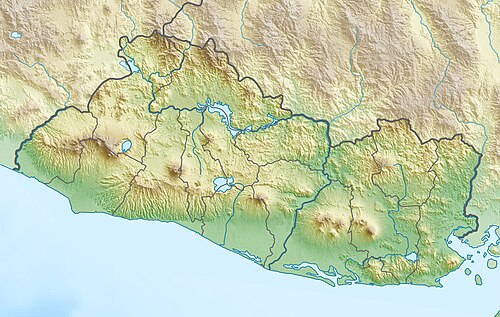
Photo by Carport, CC BY-SA. Source.

The single most quoted fact about El Salvador is that most of what it grows is still Bourbon — the old, sweet, rust-prone heirloom that nearly every other Central American origin has been replacing for decades with tougher, higher-yielding hybrids.
The figure with the best provenance comes from Perfect Daily Grind’s 2023 survey of the country: Bourbon 62%, Pacas 31%, Pacamara 2% of plantings.4 That leaves only a few percent for everything else, and it is worth pausing on how unusual it is. World Coffee Research’s own catalogue entry, recorded on this wiki’s Bourbon note, lists El Salvador first among the handful of countries where the original Bourbon is still cultivated at all.
Note also that the second line of that table is Bourbon too. Pacas is a single-gene dwarf mutation of Bourbon — the same accident that produced Caturra in Brazil and Villa Sarchi in Costa Rica — and Pacamara is half Pacas. On a genetic reading, something like 95% of El Salvador’s crop is Bourbon-lineage.
To verify — why the Bourbon survived, and how much of it there is
The 62/31/2 split above is a single figure from one trade publication;4 no Salvadoran government census confirming it was located, and the other numbers in circulation disagree. A roaster guide cited in this note’s research brief puts Bourbon at “roughly 68%”,6 and another at “approximately 60%”.7 These all sit in the same range, which is reassuring, but none is an official statistic.
The explanation usually attached to the figure is shakier still. The common story — repeated by the same roaster guide — is that the civil war of 1980–1992 left farmers too poor to replant, so El Salvador preserved its Bourbon by accident.6 That is a tidy narrative and it is consistent with the collapse in investment documented below, but no study establishing the causal link was read here. Treat it as the industry’s working explanation, not a finding.
Two varieties it gave the world
This is the verified core of El Salvador’s importance, and it comes from World Coffee Research’s variety catalogue — a technical reference maintained outside the country.
Pacas was found in 1949 on a farm owned by the Pacas family in Santa Ana, in the west of the country. It is a naturally short version of Bourbon: one gene changed, the tree stopped growing tall, and farmers kept it because a short tree can be planted closer together and picked without a ladder. From 1960, ISIC ran the pedigree-selection programme that turned that lucky tree into a plantable variety.2 It now covers roughly a quarter to a third of the national crop and has been exported to Honduras, where IHCAFE introduced it in 1974.
Pacamara is the one people have heard of. ISIC crossed Pacas with Maragogipe — a giant-bean mutation of Typica from Brazil — to get the enormous bean without inheriting all of Maragogipe’s fragility.3 World Coffee Research rates its quality potential at high altitude “Exceptional”, the top rung of the scale and the same rating it gives Geisha. It also yields low, catches rust badly, and will not breed true. The full agronomic record is on Pacamara.
The dates are less settled than the pedigrees. The commonly cited 1958 for the Pacamara cross is recollection rather than a breeding record, and the release year is genuinely disputed — see the Pacamara and ISIC notes, which set that out in full. Do not state a year for Pacamara’s creation.
What the auctions show
El Salvador runs its own national Cup of Excellence — a blind cupping competition ending in an online auction, with every top lot published under the farmer’s name. Three consecutive years of ACE’s published results give the clearest picture anyone has of what the country can actually do.
| Year | Top score | That lot | Top auction price | That lot | |
|---|---|---|---|---|---|
| 1 | 2023 | 91.82 — Mileydi, Norelvia Angelica Elias de Diaz, Pacamara | beat a Geisha into second place | $59.90/lb — the same Mileydi lot | 8 |
| 2 | 2024 | 92.00 — La Bendicion, Ismael Recinos Flores, washed Pacamara | sold at $31.60/lb | $122.00/lb — natural Geisha, Los Morales, 91.80 pts | 5 |
| 3 | 2025 | 90.93 — Santa Rosa, J. Raul Rivera S.A., honey Pacamara | sold at $41.20/lb | $55.90/lb — honey Geisha, Los Naranjos, 90.02 pts | 9 |
Three things fall out of that table.
Pacamara wins the scoring; Geisha wins the money. In two of the three years the highest-scoring coffee in the country was a Pacamara and the highest-priced one was a Geisha — and in 2024 the gap was extreme, with a 92.00-point Pacamara fetching under a third of what a 91.80-point Geisha did. The same pattern runs through Cup of Excellence records by country and Premiumisation: score is what the judges decide, price is what the bidders decide, and they are not the same thing.
El Salvador’s ceiling is real but not spectacular. The $122.00/lb record from 2024 sits fifth on this wiki’s Cup of Excellence records by country ledger — behind Ethiopia, Costa Rica, Honduras and Brazil. A country whose signature variety regularly clears 90 points is not, in auction terms, a top-tier payer.
The 2025 auction was a Pacamara-and-Geisha affair almost entirely. Across 29 lots in three categories — Washed & Honey, Natural, and Experimental — Pacamara took first in Washed & Honey and first in Experimental, and Geisha took first in Naturals.9 The variety diversity that shows up in Honduras’s competitions, with Kenyan SL28 and home-bred rust-resistant lines placing, is not really present here.
The shrinking
The other half of El Salvador’s story is decline, and it is steep enough to matter more than any auction result.
Between 1963 and 1989 the country averaged about 2.5 million sixty-kilogram bags a year.4 The 2022/23 harvest was forecast at about 619,000 bags,4 and the FAO figure for 2023 works out to roughly 540,000.1 Whichever number you take, El Salvador now grows something like a fifth to a quarter of what it grew at its peak.
The economic collapse behind that is documented. Coffee was “virtually the sole export crop” by 1880; in 1980 it accounted for 50% of GDP and more than $615 million in revenue; by 1985 that had fallen to around $403 million, and green yields dropped from 175,000 tonnes in 1979 to 141,000 tonnes in 1986 — a 19% fall attributed directly to the drop in investment caused by the war. By 2002, coffee was 3.5% of GDP, and some 70,000 jobs had gone.10
That is the context every Salvadoran specialty story sits inside. The country that was called the Coffee Republic between the late 1800s and mid-1900s4 is now a small producer with an outsized reputation, selling a shrinking crop of an old variety into a market that will pay for it — sometimes.
Where it grows
Salvadoran coffee is grown on volcanic mountain ranges, and the range names are the region labels that appear on specialty bags. The six usually listed are:
| Region | Where |
|---|---|
| Apaneca-Ilamatepec | West, the largest and best known |
| Alotepec-Metapán | North-west, on the Guatemalan and Honduran borders |
| El Bálsamo-Quezaltepec | Centre-south, behind the coast |
| Chichontepec | Centre, around the San Vicente volcano |
| Tecapa-Chinameca | East-centre |
| Cacahuatique | East |
Two of those names carry most of the competition record. Apaneca-Ilamatepec and Alotepec-Metapán are where this wiki’s Pacamara note places the Salvadoran concentration of that variety, and Santa Rosa — the Alotepec-Metapán farm of Jorge Raúl Rivera’s family — has won the national competition four times with the same honey-processed Pacamara block.
To verify — the region list itself disagrees between sources
The six names above are the list in general trade circulation, but the sources consulted here do not agree on it and neither official body’s website could be read.
- The English Wikipedia article names four: Apaneca-Ilamatepec, Alotepeque-Metapán, Cacahuatique, and El Bálsamo-Quezaltepec.10
- A roaster origin guide names five, and not the same five: Apaneca-Ilamatepec, “Central Belt”, Chichontepec, Cacahuatique, and “Tecapa-Chichontepec”.7
“Tecapa-Chichontepec” appears to be a garbling of two separate ranges, and “Central Belt” is not a range name at all. No official Salvadoran source confirming the canonical six was readable — both
cafedeelsalvador.comandisc.gob.svreturned HTTP 403 to an automated fetch here, matching what this wiki already records for Salvadoran government coffee sites. Use the table above as the working list, not as regulation.
To verify — altitudes
No verified altitude figures for El Salvador appear anywhere in this note’s sources. The research brief behind it says so explicitly, and warns that the commonly repeated “1,300–1,800 m” band is extrapolation. What can be said is indirect: El Salvador sits at roughly 14° north, so World Coffee Research’s optimal-altitude floor for both Pacas and Pacamara at that latitude is above 1,300 m — a threshold from a variety catalogue, not a measurement of any Salvadoran farm.23
Who runs it
The institutional chain here is unusually broken, and the wiki cannot document it from primary sources.
ISIC — the national coffee research institute that bred Pacamara and selected Pacas — is defunct, and has no web presence of its own. Its working role is generally described as having passed to the coffee foundation PROCAFE, which holds El Salvador’s seat in the Central American breeding consortium alongside CATIE, ICAFE, IHCAFE and ANACAFÉ. A 2021 law created the Instituto Salvadoreño del Café (ISC) as the current state coffee institute, and a 2023 decree is reported to have merged it with the Consejo Salvadoreño del Café.
One thing about the current body is verified: World Coffee Research describes the ISC — which it calls simply “formerly Consejo Salvadoreño del Café” — as coordinating “promotion, quality competitions, and support for producers,” and ISC now hosts its own El Salvador Exclusive Nano Lot Auction on M-Cultivo, separately from the Cup of Excellence results above.1112 See Instituto Salvadoreño del Café.
Every other link in that chain is unverified, and the Instituto Salvadoreño de Investigaciones del Café note sets out exactly which decree says what and which documents could not be read. The short version for a reader: the country that bred one of the world’s great varieties has no readable public archive of having done so, and the authoritative record of its work now lives in a seed catalogue maintained in another country.
To verify — production scale and historical ranking
Two claims from the research brief behind this note are not stated as fact above.
- A roaster origin page gives El Salvador’s production as 700,000 60 kg bags with no crop year attached.7 That is above both the 2022/23 forecast (619,000)4 and the FAO 2023 figure (~540,000),1 so it is either an older year or a rounder estimate. Don’t quote it.
- The same page states El Salvador was once the 4th largest coffee producer worldwide.7 The country’s 2.5-million-bag average in the 1960s–80s4 makes a high historical ranking plausible, but no FAO or ICO table confirming fourth place was located, and no year is given for the claim.
When coffee arrived — genuinely unsettled
The introduction date is one of the clearest source conflicts on this page, and it is a difference of roughly eighty years.
- Perfect Daily Grind states coffee “arrived in El Salvador around 1740”.4
- The English Wikipedia article states coffee was “first cultivated in El Salvador for domestic use early in the 19th century,” with its commercial potential recognised by mid-century.10
To verify — 1740 versus the early 1800s
These two accounts cannot both be describing the same thing, and neither cites a primary archival record. A plausible reconciliation is that coffee arrived as a curiosity in the 1700s and only became a cultivated crop in the 1800s — but no source consulted here makes that argument, so it is a guess and is written as one.
What both sides agree on is the endpoint: by 1880 coffee had become effectively El Salvador’s only export crop.104 Use 1880, not 1740, as the date this page stands behind.
Why it matters
El Salvador is the strongest argument in this wiki that an origin’s importance is not measured in bags.
Nineteenth in the world by volume, a fifth of its own historical peak, no readable national coffee archive, and a government website that will not load — and yet two of the varieties in the global catalogue came from here, one of them rated at the very top of the quality scale, and a large share of what the country still grows is the heirloom everyone else pulled out. Ecuador-sized production, Panama-sized reputation, Brazil-sized influence on what other people plant.
It also carries a warning that shows up on the Coffee leaf rust and Climate change and coffee notes. The genetic heritage everyone praises — Bourbon, Pacas, Pacamara — is, without exception, badly exposed to leaf rust. El Salvador kept the good stock partly because it could not afford to replace it, and the same coffees that win its auctions are the ones a bad rust year takes out first. The heritage and the fragility are the same trees.
Related
- Pacas — the dwarf Bourbon mutation found in Santa Ana in 1949
- Pacamara — the Pacas × Maragogipe cross, and the country’s signature variety
- Instituto Salvadoreño de Investigaciones del Café — the defunct state institute that bred and selected both
- Pacas family — the Santa Ana growers the Pacas variety is named after
- PROCAFE · Instituto Salvadoreño del Café · Consejo Salvadoreño del Café — the bodies that came after ISIC
- Bourbon · Typica · Maragogipe · Caturra · Villa Sarchi · Geisha — the lineage this origin sits inside, and what else is planted
- Cup of Excellence · Alliance for Coffee Excellence · Cup of Excellence records by country — the competition, and where El Salvador’s $122.00/lb record ranks
- Jorge Raúl Rivera — the grower whose farm Santa Rosa has won that competition four times with Pacamara
- Aida Batlle — the Santa Ana producer whose Finca Kilimanjaro won the country’s first Cup of Excellence in 2003 at $14.06/lb
- Mauricio Salaverria — the Ataco producer who took 5th, 6th and 7th at the 2015 national competition with three different farms
- Honduras · Guatemala · Panama — the neighbours and the comparison points
- IHCAFE · ICAFE · ANACAFÉ · CATIE — the Central American institutes ISIC’s successor breeds alongside
- Coffee leaf rust — what all three of El Salvador’s signature varieties are exposed to
- Climate change and coffee · C-market · Premiumisation — the economics underneath the auction prices
- Washed process · Honey process · Natural process · Anaerobic fermentation — the categories the national auction is split by
- Cupping · Coffee scoring — how the scores above are produced
- World Coffee Research — keeper of the catalogue that is now the authoritative record of El Salvador’s breeding work
Official links
- Official site — Café de El Salvador (Consejo Salvadoreño del Café) — unconfirmed: returned HTTP 403 to an automated fetch here, so nothing on this page rests on its text
- Official site — Instituto Salvadoreño del Café (ISC) — the current state coffee institute; also returned HTTP 403
- Official results — Alliance for Coffee Excellence, Cup of Excellence El Salvador 2025
- Official results — Alliance for Coffee Excellence, Cup of Excellence El Salvador 2024
- Official site — World Coffee Research variety catalogue
Footnotes
-
List of countries by coffee production (FAO data for 2023) — Wikipedia — confirmed via WebFetch ↩ ↩2 ↩3 ↩4 ↩5
-
Perfect Daily Grind — How can El Salvador leverage Pacamara coffee? — confirmed via WebFetch ↩ ↩2 ↩3 ↩4 ↩5 ↩6 ↩7 ↩8 ↩9 ↩10 ↩11
-
Alliance for Coffee Excellence — Cup of Excellence El Salvador 2024 results and auction — figures as recorded on this wiki’s Pacamara and Cup of Excellence records by country notes ↩ ↩2 ↩3
-
JayArr Coffee — El Salvador coffee guide: Pacamara, Bourbon heritage — cited via this note’s research brief only ↩ ↩2
-
Modern Standard Coffee — Coffee origins: El Salvador — cited via this note’s research brief only ↩ ↩2 ↩3 ↩4
-
Alliance for Coffee Excellence — Cup of Excellence El Salvador 2023 results and auction — figures as recorded on this wiki’s Pacamara note ↩
-
Alliance for Coffee Excellence — Cup of Excellence El Salvador 2025 results and auction — confirmed via WebFetch ↩ ↩2
-
Coffee production in El Salvador — Wikipedia — confirmed via WebFetch ↩ ↩2 ↩3 ↩4
-
World Coffee Research — El Salvador country profile — confirmed via WebFetch ↩
-
M-Cultivo — auction events calendar — confirmed via WebFetch ↩